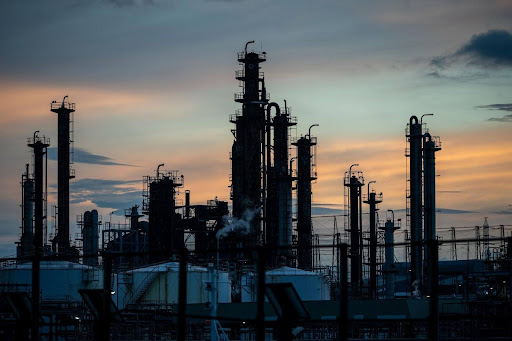
Beyond the numbers flashing across trading screens, the human and physical toll of Iran’s energy offensive became clearer Thursday as Bahrain ordered residents to shelter indoors, Iraq’s oil ports fell silent, and merchant sailors were trapped aboard a stricken vessel in the Gulf. Oil prices reflected the chaos, with Brent climbing back toward $100 a barrel as the supply of crude from one of the world’s most important producing regions was progressively squeezed. The crisis is testing the resilience of global energy supply chains.
Three crew members were reported trapped aboard the Thai-registered Mayuree Naree after it was struck near the Strait of Hormuz. Bahrain issued a shelter-in-place order for the Muharraq Governorate after Iranian forces hit fuel storage tanks in the area. Iraq halted all operations at its oil ports following attacks on two tankers in adjacent waters.
Oman cleared all vessels from its Mina Al Fahal oil export terminal after a neighboring port was targeted by drone strikes. The terminal is among the last functional crude export points in a region where the Strait of Hormuz has been blocked since February 28. Saudi Aramco warned that the blockade’s continuation would be catastrophic for global energy markets.
The IEA mobilized the largest emergency crude release in its history — 400 million barrels from 32 member nations — to counteract the supply disruption. The United States added 172 million barrels from its Strategic Petroleum Reserve, beginning deliveries within a week. Yet despite this historic intervention, Brent crude settled around $98 a barrel, up 6% on the day.
Goldman Sachs raised its Q4 2026 Brent forecast to $71 per barrel. Deutsche Bank warned of a growing stagflationary threat. Asian stock markets declined and European gas prices gained 7.7%.