
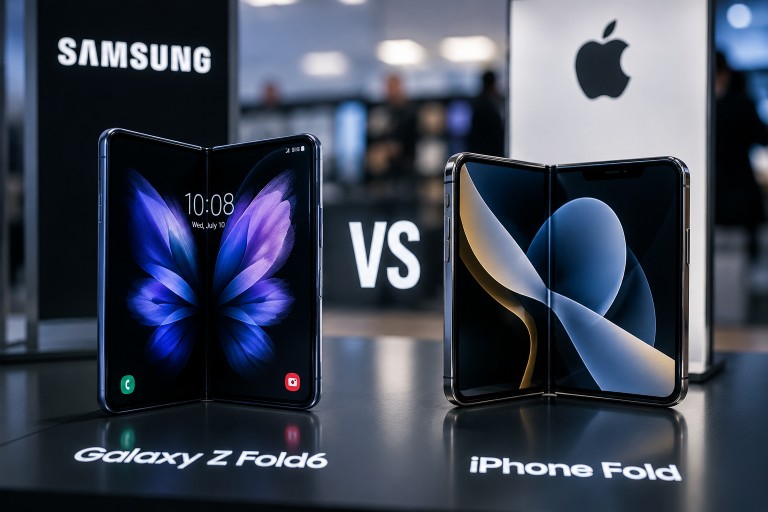
Samsung Electronics is gearing up for the launch of its newest Galaxy foldable smartphones on July 22, as it seeks to solidify its dominance in the high-end foldable device market. This move comes as anticipation builds for Apple’s rumored entry into the foldable smartphone segment. While last year saw manufacturers emphasizing ultra-thin designs, industry insiders note that consumers are still more concerned with aspects like battery longevity, camera quality, durability, and pricing rather than just sleekness.
Significant advancements in hinge design, battery technology, display, cameras, and thermal management have enabled Samsung’s latest Galaxy Z Fold model to be markedly thinner and lighter than its previous version. This reflects Samsung’s ongoing efforts to make foldable devices more user-friendly without sacrificing performance, aiming to integrate these cutting-edge devices into everyday life more seamlessly.
Amid speculation, Apple is believed to be on the verge of unveiling its first foldable iPhone later this year. Although the tech giant has yet to make an official announcement, reports suggest that the upcoming device will feature a robust folding display, high-quality cameras, extended battery life, and a lightweight form, promising a competitive entry into the foldable landscape.
The foldable smartphone arena is seeing increased competition, especially from Chinese manufacturers who are introducing devices that are not only thinner but also equipped with larger batteries. This shift in focus from merely producing the slimmest phones to creating a well-rounded user experience is becoming more pronounced across the industry.
Despite facing intensified rivalry, Samsung’s established ecosystem for foldables, its extensive global distribution network, and its strong software support give it a competitive edge. Additionally, its AI-powered features enhance user experience. Industry experts predict that Apple’s entry into the foldable market will not only heighten competition but also spur innovation within the premium smartphone sector.