
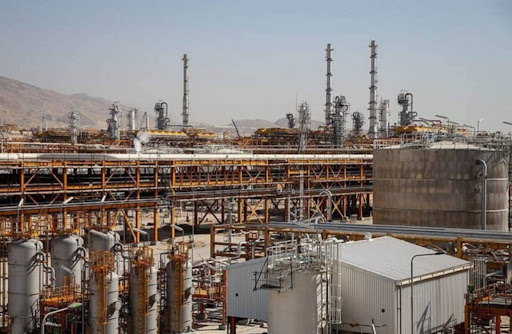
Iran’s warnings against Gulf energy giants echoed across world markets on Wednesday after the Revolutionary Guards threatened imminent strikes against facilities in Saudi Arabia, the UAE, and Qatar following an Israeli attack on the South Pars gasfield. Specific sites were named and evacuation orders issued. Oil prices climbed toward $110 a barrel as the warnings sent tremors through global energy trading floors.
South Pars, shared between Iran and Qatar, holds the world’s largest natural gas reserves and has been the cornerstone of Iran’s energy export economy throughout the conflict. The Israeli strike on the field — reportedly authorized by the US — was the first direct attack on Iranian fossil fuel production. Both countries had previously avoided this move, but the decision to proceed immediately triggered Iran’s most specific and threatening retaliatory declaration of the war.
Iran’s state broadcaster named Saudi Arabia’s Samref refinery and Jubail complex, the UAE’s al-Hosn gasfield, and Qatar’s Mesaieed and Ras Laffan facilities as imminent targets. Workers and residents were ordered to evacuate without delay. Governor Eskandar Pasalar of Asaluyeh condemned the US-Israeli escalation as “political suicide” and declared Iran was now fighting a total economic war on behalf of its energy interests.
Brent crude rose nearly 5% to $108.60 a barrel, while European gas benchmarks surged more than 7.5%. Gulf oil exports had already been reduced by 60% from pre-war levels due to infrastructure damage and Iran’s Strait of Hormuz blockade. Iran had continued to ship its own crude through the strait unimpeded while preventing Gulf neighbors from doing so — a strategic advantage that had given it significant economic leverage throughout the conflict.
Qatar’s government spokesperson warned that attacking energy infrastructure threatened global energy security and regional populations. The echoes of Iran’s warnings reached from the Gulf to London, New York, and Tokyo, where energy traders and policymakers grappled with the potential consequences of a full-scale energy infrastructure war in the world’s most energy-critical region. The next few hours held the answers — and the world was listening.