
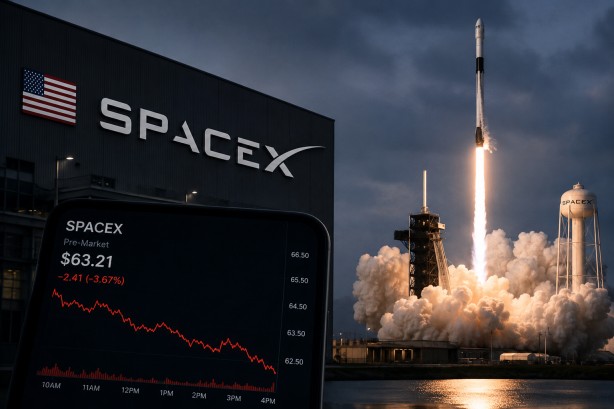
SpaceX is currently navigating potential market fluctuations as a significant 911.5 million shares are set to become tradable. This development presents an opportunity for certain employees and early investors to divest shares acquired prior to the company’s record-setting initial public offering (IPO). On Wednesday, the company’s stock experienced a sharp decline of nearly 14%, closing at $108.27. This marks the second-largest single-day drop for SpaceX and positions the shares approximately 20% below the initial IPO price of $135. The downturn follows closely on the heels of the company’s recent debut in the public markets.
Initially, SpaceX made only a limited number of shares available for public trading, contributing to a high demand post-IPO due to the constrained supply. However, the forthcoming release of shares is poised to significantly expand the pool available to investors, potentially resulting in heightened short-term market volatility. Despite this, it is not certain that all 911.5 million shares will be sold immediately. Employees and early stakeholders have the option to hold onto their shares or sell them, with those having acquired shares at considerably lower valuations prior to the IPO possibly motivated to capitalize on their investments.
To manage the release of these shares, SpaceX has implemented a staggered schedule instead of a single, conventional lock-up period. This strategy will see additional share releases later in the year, potentially putting billions more Class A shares into the trading arena. In contrast, Elon Musk and other senior executives are subject to a more extended restriction period, with their shares remaining locked for a longer duration compared to those in the current release. Given Musk’s significant shareholding, his eventual release of shares will be closely monitored by investors, as it represents a substantial portion of SpaceX’s market value.
The influx of publicly traded shares could also have implications for SpaceX’s position in the Nasdaq-100 index. Currently holding a weighting of about 1%, this could rise to over 3.5%, contingent upon the stock price and the number of shares available during the next index recalibration. While the unlocking of these shares might generate short-term selling pressure, it does not alter the fundamental operations of SpaceX. Investors will continue to evaluate the company’s financial health, growth trajectory, investments in artificial intelligence, and its ability to execute on long-term strategic objectives.