
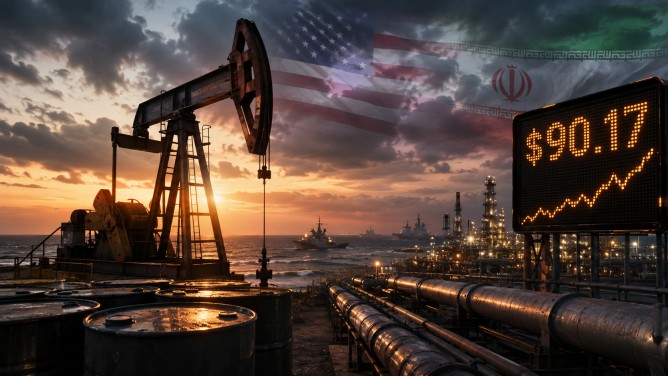
As the two-month period for peace talks between the United States and Iran concluded without a breakthrough, oil prices surged, signaling potential prolonged instability in global energy markets. Brent crude oil crossed the $90 per barrel threshold, hitting approximately $91.63, marking its highest point since late July. This increase followed a stern warning from U.S. President Donald Trump, who insisted that Iran must capitulate, cautioning that the situation might worsen if diplomatic negotiations fall through.
The strategic Strait of Hormuz, a vital conduit for international oil shipments, has become a focal point of concern. A noticeable decline in commercial vessel traffic through this narrow passage has exacerbated fears of sustained interruptions in oil supply. The precariousness of the situation was underscored by reports of an attack on a cargo ship navigating the strait, intensifying anxiety over the region’s maritime security.
Iran has hinted at adopting a more assertive military posture should the negotiations collapse, further escalating the potential for conflict. Such developments have led investors to brace themselves for a possible protracted disturbance in oil supplies. Any extended blockage or slowdown of traffic through the Strait of Hormuz could place additional upward pressure on oil prices.
Analysts have cautioned that the ongoing tensions in the Middle East, when combined with the existing conflict in Ukraine, could lead to further shocks in the global energy landscape. These geopolitical dynamics might drive oil and gas prices even higher, adding to the economic challenges faced by countries around the world.