
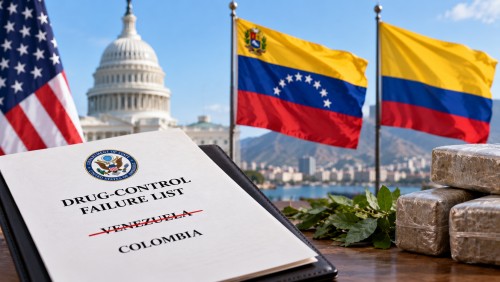
The ongoing battle against drug trafficking in Latin America remains a focal point for U.S. foreign policy, with recent developments highlighting a shift in its approach towards Venezuela. The United States has officially removed Venezuela from its list of countries that have “failed demonstrably” to adhere to international counternarcotics commitments. This decision reflects what the Trump administration describes as progress under interim President Delcy Rodríguez in combating drug-trafficking organizations within Venezuela.
Previously, Venezuela was classified alongside other nations that fell short of meeting the U.S. standards for counternarcotics efforts. The change in status is indicative of improved collaboration between Washington and Caracas, as the U.S. continues to prioritize cooperation in drug control across Latin America. However, the U.S. government still designates Venezuela as a major drug-transit or illicit drug-producing country for fiscal year 2027, underscoring the ongoing challenges in the region.
In contrast, Colombia remains on the U.S. list of countries failing to meet international counternarcotics obligations. The White House identified Colombia as one of four nations that have not made substantial efforts in the past year to counter coca cultivation, cocaine production, and drug-trafficking networks. Despite these concerns, President Trump signaled a possibility for Colombia to be removed from the list next year, contingent upon demonstrable progress in its drug control strategies.
Colombian officials have expressed a commitment to addressing the entire drug-trafficking chain. This includes targeting illicit crops, dismantling production facilities, intercepting trafficking routes, disrupting criminal finances, and combating international drug networks. These efforts are part of Colombia’s broader strategy to tackle the pervasive issue of drug trafficking within and beyond its borders.
The U.S. decision to adjust its classification of Venezuela, while maintaining pressure on Colombia, underscores a nuanced approach to drug policy in the region. As both countries continue to grapple with the complexities of narcotics control, their efforts will be closely monitored by the international community and the United States, which remains a pivotal partner in Latin America’s fight against drug trafficking.