
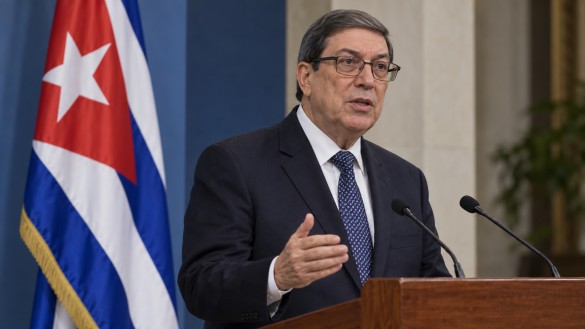
As the United Nations General Assembly prepares to vote on a resolution calling for an end to the United States’ long-standing trade embargo against Cuba, Cuban Foreign Minister Bruno Rodríguez has accused the U.S. of employing coercive tactics to sway the outcome. Scheduled for October 28, this will be the 34th time the issue of the embargo, formally addressed in the draft resolution titled “Necessity of Ending the Economic, Commercial and Financial Embargo Imposed by the United States of America Against Cuba,” is brought before the Assembly.
Rodríguez claims that the U.S. has been exerting political pressure and threatening economic repercussions to influence other countries’ votes. Allegations include threats of sanctions, punitive tariffs, visa restrictions, and the suspension of cooperation programs to dissuade nations from supporting the resolution. He emphasizes that the vote is a matter of national sovereignty and the right for countries to independently determine their foreign policies.
In a move that has intensified the economic strain on Cuba, Rodríguez notes that the resolution this year responds to fuel and energy restrictions imposed by the U.S. in January 2026. These measures, introduced through an executive order signed by then-President Donald Trump, targeted countries and entities supplying fuel to Cuba, which Havana argues has exacerbated its economic challenges. Rodríguez estimates that over the past six decades, the embargo has inflicted more than $178.7 billion in economic losses on Cuba.
The upcoming vote follows a similar resolution presented in 2025, which saw broad international support with 165 votes in favor, seven against, and 12 abstentions. This historical backing underscores the global call for ending the embargo, despite continuous opposition from the United States.