
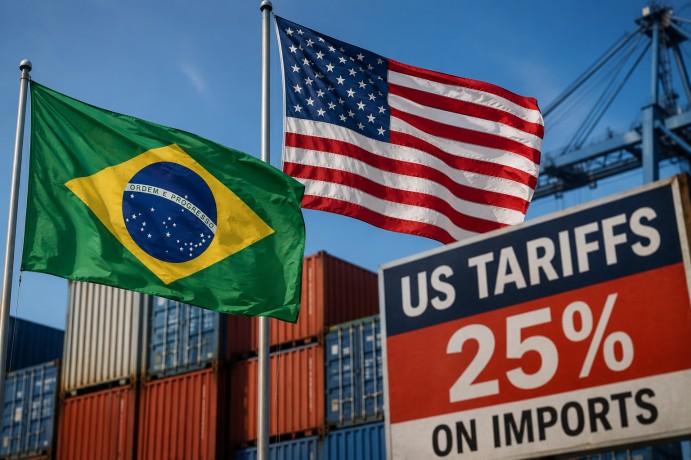
The Brazilian government has expressed strong disapproval of the United States’ recent decision to implement a 25% tariff on certain Brazilian goods, scheduled to take effect on July 22. Describing the move as unwarranted, Brazil has firmly rejected the claims of unfair trade practices levied against it. In an official statement, the Brazilian authorities emphasized that the country does not participate in unfair trade activities and has voiced its opposition to the tariff proposal introduced by Washington.
This latest trade measure will impact a selection of Brazilian imports. However, to prevent disruptions in the supply chain, certain key commodities such as coffee, beef, oranges, orange juice, specific oil and gas products, and aerospace components have been excluded from the tariff imposition. Despite these exemptions, the action has fueled tensions between the two nations.
The US Trade Representative justified the tariffs by citing an investigation that purportedly uncovered several unfair trade practices by Brazil, including inadequate anti-corruption measures and unreasonable trade policies. American officials have argued that the tariffs aim to safeguard fair competition for U.S. businesses and workers. They also noted that discussions with Brazil are still ongoing, leaving room for potential negotiation and resolution.
Adding to the diplomatic strain, U.S. Secretary of State Marco Rubio criticized the administration of Brazilian President Luiz Inácio Lula da Silva, accusing it of not negotiating in good faith. Rubio pointed out that the economic strategies of Brazil’s government have had adverse effects on both American and Brazilian interests. In response, Brazil has steadfastly dismissed these allegations and maintains its opposition to the tariff strategy.