
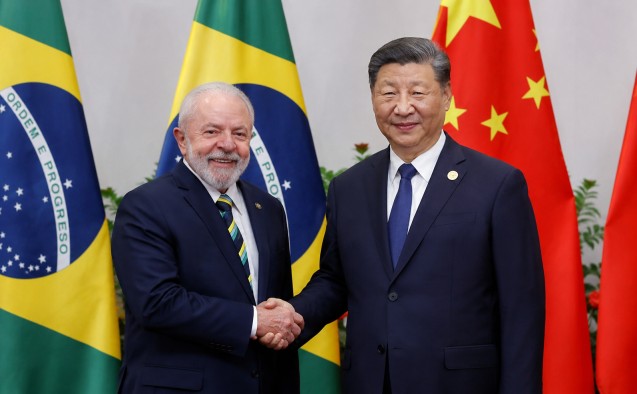
In a recent phone conversation, Chinese President Xi Jinping and Brazilian President Luiz Inácio Lula da Silva focused on enhancing the longstanding partnership between their two nations. Both leaders underscored the importance of bolstering bilateral ties and expanding economic cooperation, especially in today’s unpredictable global environment. President Xi highlighted the progress made through China and Brazil’s collaborative efforts, which, he stated, have significantly contributed to economic growth and stability. He expressed China’s readiness to intensify strategic coordination with Brazil, emphasizing the importance of collaboration both at the bilateral level and within broader multilateral frameworks.
During the discussion, President Xi advocated for stronger alliances among Global South countries. He called on China and Brazil to collaborate on promoting high-quality development within the BRICS bloc, a group that also includes Russia, India, and South Africa. Furthermore, Xi urged both nations to support reforms in the global governance system, aiming to uphold international fairness and justice. His remarks reflect China’s broader strategy of advocating for a more equitable global order and enhancing its influence among developing nations.
President Lula, on his part, emphasized the flourishing state of Brazil-China relations, pointing to record levels of bilateral trade and the growth of cultural exchanges between the two countries. He expressed Brazil’s keen interest in boosting cooperation with China, particularly in the fields of artificial intelligence, energy, and minerals. Lula also welcomed the prospect of increased Chinese investment in Brazil, indicating a commitment to further strengthening economic ties.
Additionally, President Lula congratulated China on its upcoming role as the host of the 2026 World Artificial Intelligence Conference. He reiterated Brazil’s commitment to collaborating with China on global platforms such as the United Nations and BRICS. Lula also emphasized the importance of supporting multilateralism and resolving international disputes through dialogue, aligning with the shared vision of both leaders for a more cooperative international community.
Legal Disclaimer: The information contained in this article has been provided by independent third-party contributors, clients, or content partners. We do not independently verify the accuracy, completeness, legality, ownership, licensing, or reliability of submitted content, including text, images, videos, trademarks, or other media materials. The submitting party is solely responsible for ensuring that all content, including images and media assets, complies with applicable copyright, trademark, licensing, and intellectual property laws. We disclaim liability for any unauthorized use of copyrighted or proprietary materials by third parties. If you believe that any content published on this platform infringes your intellectual property rights, kindly contact the author above for prompt review and resolution.