
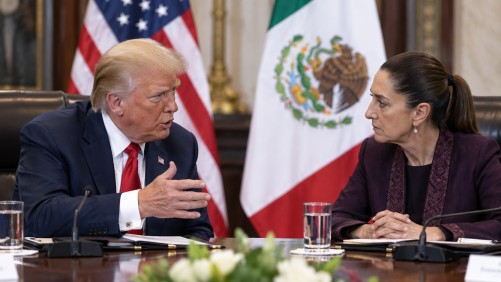
Amid ongoing concerns over drug trafficking, the United States continues to scrutinize international efforts to curb the flow of illegal drugs into its borders. Recently, U.S. President Donald Trump emphasized the need for Mexico to strengthen its actions against drug cartels, highlighting what he perceives as insufficient measures from its southern neighbor.
In a formal communication to Congress, Trump acknowledged some progress under Mexican President Claudia Sheinbaum’s leadership, particularly noting increased drug seizures and the dismantling of illicit laboratories. He also recognized the deployment of additional security forces along the U.S.-Mexico border. However, Trump asserted that these steps fall short of what is required to effectively combat the powerful drug-trafficking organizations operating within Mexico.
The U.S. president called for more aggressive actions against the financial networks supporting these criminal groups and urged Mexico to take decisive steps against public officials allegedly aiding cartels. Trump underscored the importance of arresting and prosecuting officials suspected of involvement with drug cartels to dismantle the entrenched networks that facilitate drug trafficking across large swathes of Mexican territory.
Mexico was identified along with Canada and several other nations by the U.S. government as significant drug-transit or illicit drug-producing countries. This list also includes several Central American and Caribbean countries such as Guatemala, Honduras, El Salvador, Haiti, the Dominican Republic, Jamaica, and Belize, which are considered critical parts of the international drug-trafficking routes.
Trump’s appeal for heightened measures from Mexico reflects ongoing diplomatic and security challenges between the two countries as they attempt to address the complex issues of drug trafficking and cross-border crime. The U.S. administration’s focus remains on intensifying international cooperation to disrupt the supply chains that feed the illegal drug trade.