
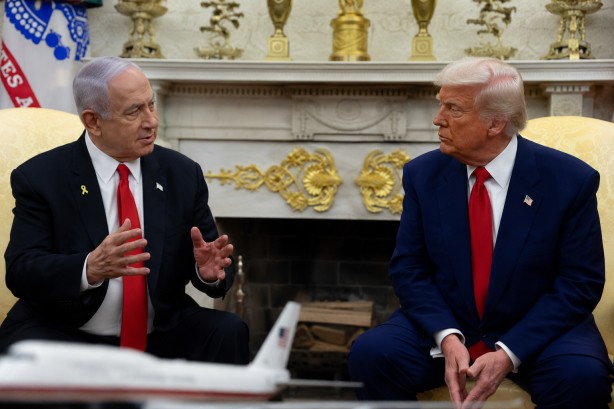
In a significant meeting at the White House, Israeli Prime Minister Benjamin Netanyahu and U.S. President Donald Trump engaged in discussions centered on Iran, regional security, and the future of U.S.-Israel relations. The two leaders explored various strategies for dealing with Iran, including the possibility of a new diplomatic agreement, heightened economic sanctions, and even military measures. Rather than pushing for a particular course of action, the conversation was characterized as an exchange of ideas, according to a senior Israeli official.
Despite expressing skepticism about Iran’s commitment to any prospective agreement, Netanyahu stopped short of advocating for new military strikes by the U.S. Both leaders concurred that a key priority is to prevent Iran from acquiring nuclear weapons. The talks also delved into the potential to increase economic pressure on Iran while mitigating any adverse effects on the global energy market. Netanyahu emphasized the importance of ensuring that Iran cannot exploit the Strait of Hormuz as a bargaining chip in negotiations.
The conversation wasn’t limited to Iran alone; regional security issues also featured prominently. Netanyahu shared maps to detail Israel’s security concerns, highlighting its military presence in Syria and southern Lebanon. He underscored the necessity of maintaining defensive positions to counter possible threats. This aspect of the discussion aimed at reinforcing Israel’s strategic stance in the region.
The meeting further explored the long-term cooperation between the U.S. and Israel in the defense sector. Netanyahu suggested a gradual reduction in Israel’s dependency on American military aid over the coming decade. He proposed expanding joint defense research and development initiatives as a means to strengthen bilateral defense ties.
Despite reports suggesting friction between the leaders, the Israeli official insisted that the relationship remains close and cooperative. This assertion comes amid ongoing deliberations regarding regional policy, underscoring a shared commitment to mutual security objectives. The discussions at the White House reflect the ongoing collaboration and strategic alignment between the two nations.